SURFACE
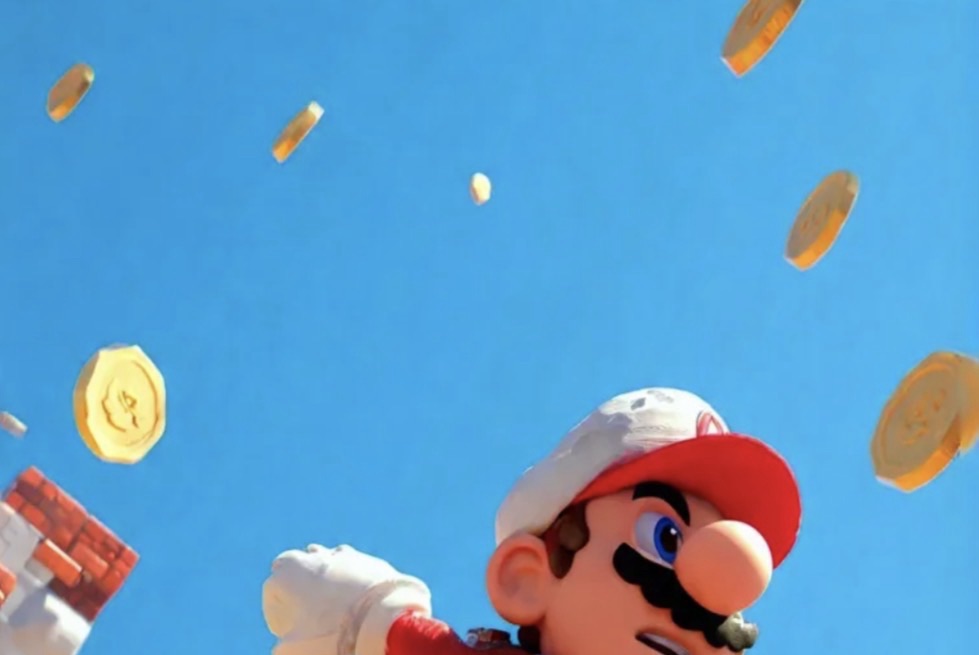
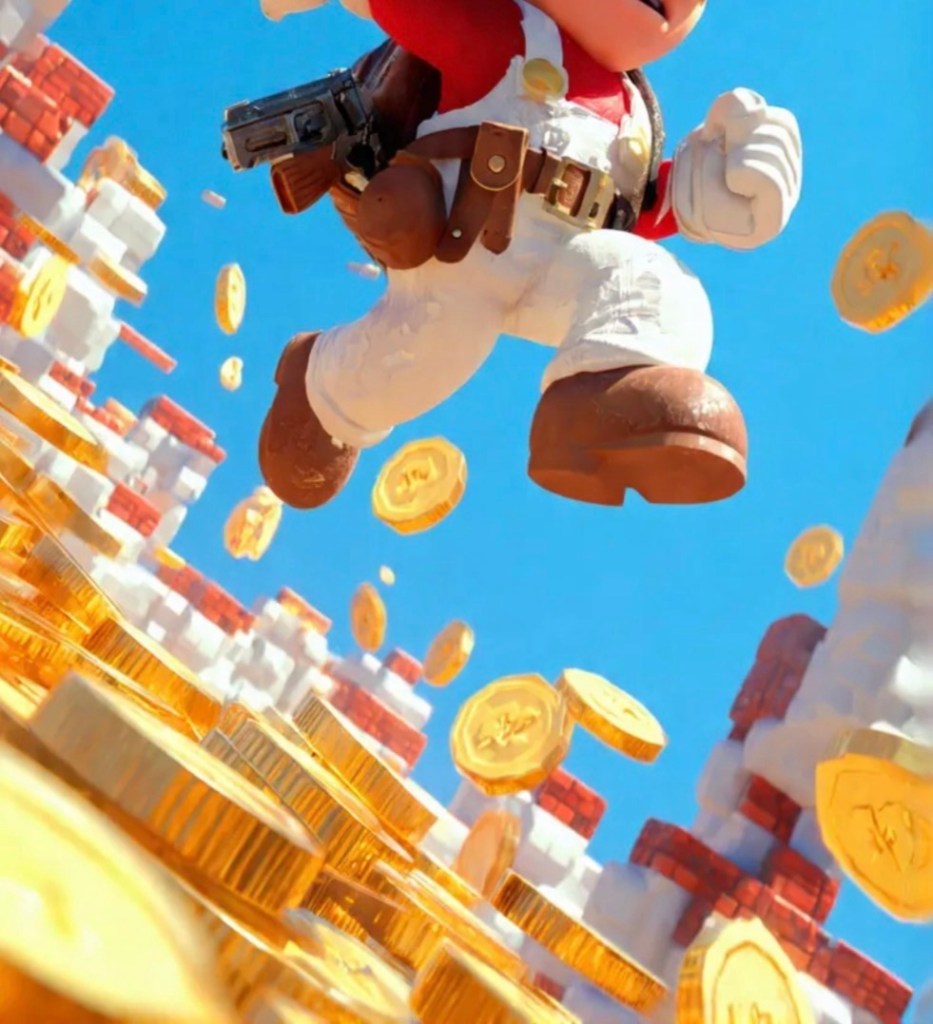
This animated work by Farid Nazifi transforms a familiar platform-game fantasy into a
sharp meditation on labor, reward, and the ideology of endless progress.
Artistic analysis
Visually, the piece is exuberant and kinetic. The central figure—an instantly
recognizable, mustached platforming hero archetype—is frozen mid-leap, bodyangled forward, fists clenched, eyes fixed on an unseen goal. Gold coins explode
through the sky in exaggerated arcs, while blocky architectural forms stack beneath
him like a manicured obstacle course. The color palette is aggressively optimistic:
saturated blues, glowing yellows, and clean whites evoke joy, speed, and triumph.
Yet Nazifi subtly disrupts this cheerfulness. The hero’s outfit has been modified—
utility straps, a sidearm, heavier gear—introducing a militarized or industrial weight to
an otherwise playful body. The painterly texture gives the scene a sculpted, almost
propagandistic finish, as if this were not a moment of play but a staged victory
image.
Political analysis
Politically, the work reads as a critique of gamified capitalism. The endless cascade
of coins symbolizes reward without fulfillment: accumulation as spectacle. The
protagonist is always moving, always jumping, never arriving. Success is measured
not by rest or resolution, but by momentum. This mirrors contemporary labor
systems in which productivity is framed as play—points, bonuses, achievements—
masking exhaustion behind bright interfaces.
The militarized accessories complicate the metaphor. They suggest that participation
in this system is not entirely voluntary. Progress is enforced; competition is armed.
Even innocence must adapt to survive. The hero is no longer a carefree avatar but a
disciplined worker-soldier, optimized for extraction in a world where value literally
rains from the sky yet never belongs to anyone for long.
There is also an ideological dimension to nostalgia. By reworking a childhood symbol
of optimism and agency, Nazifi exposes how cultural myths of “hard work leads to
reward” persist into adulthood, even as real economic mobility becomes more
constrained. The image seduces first, then unsettles: why is joy indistinguishable
from obligation?Synthesis
Ultimately, this work presents movement as both freedom and trap. The leap is
heroic, dynamic, and beautiful—but it is also compulsory. Nazifi doesn’t destroy the
fantasy; he overloads it. Coins shine too brightly, the jump is too perfect, the smile
too determined.
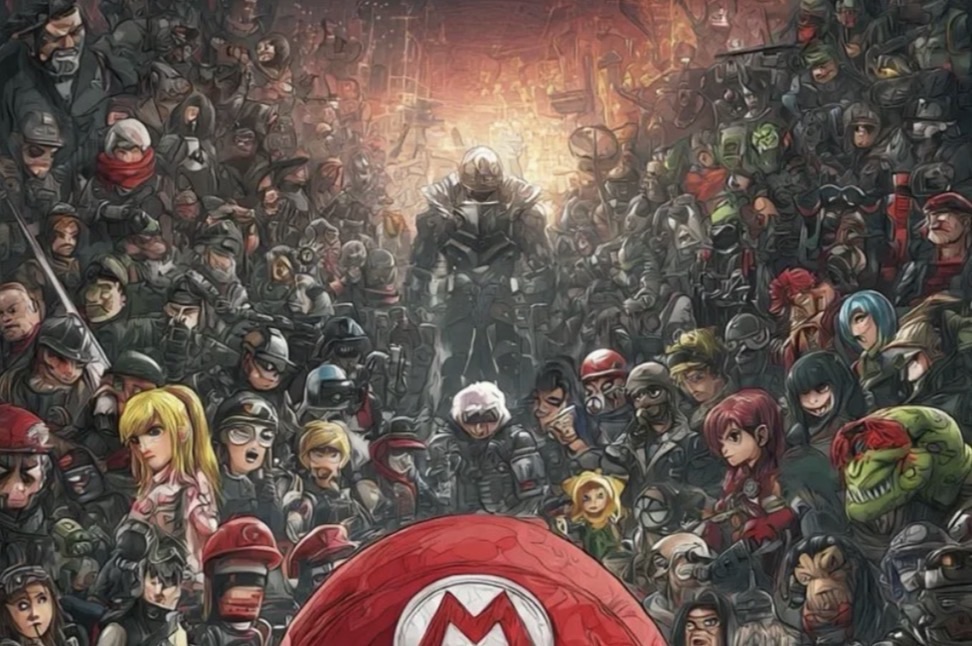
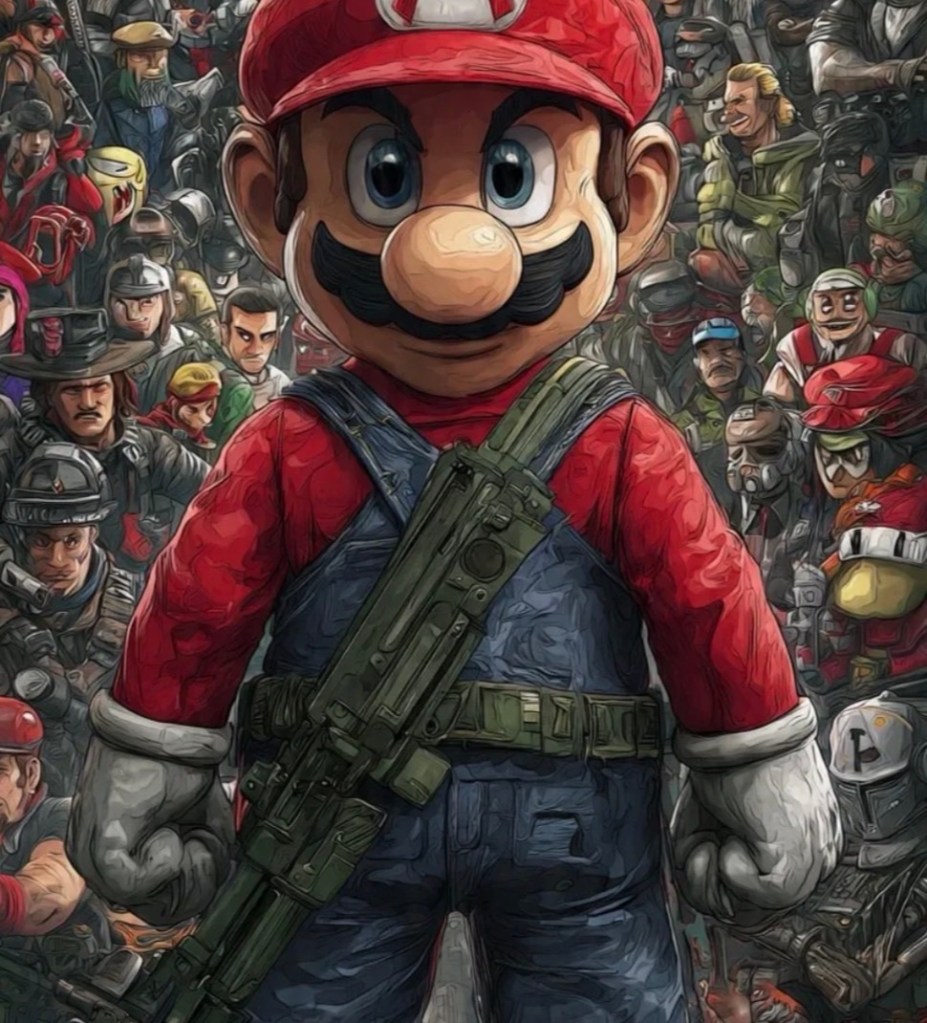
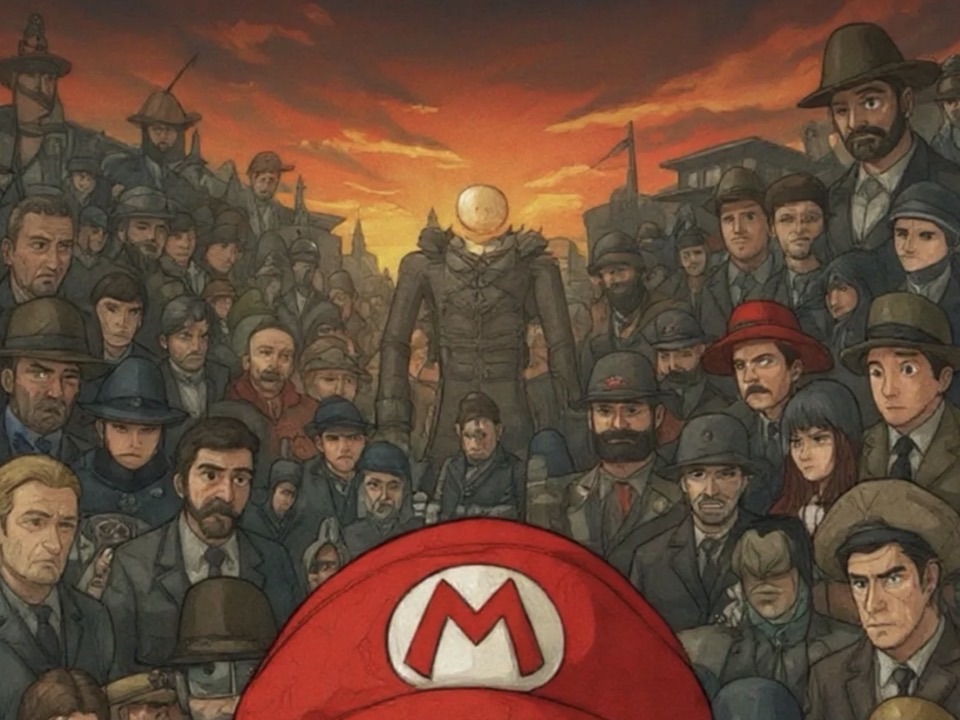
This animated work by Farid Nazifi stages a collision between innocence and
militarization, using visual overload and cultural familiarity to deliver a pointed political
critique.
Artistic analysis
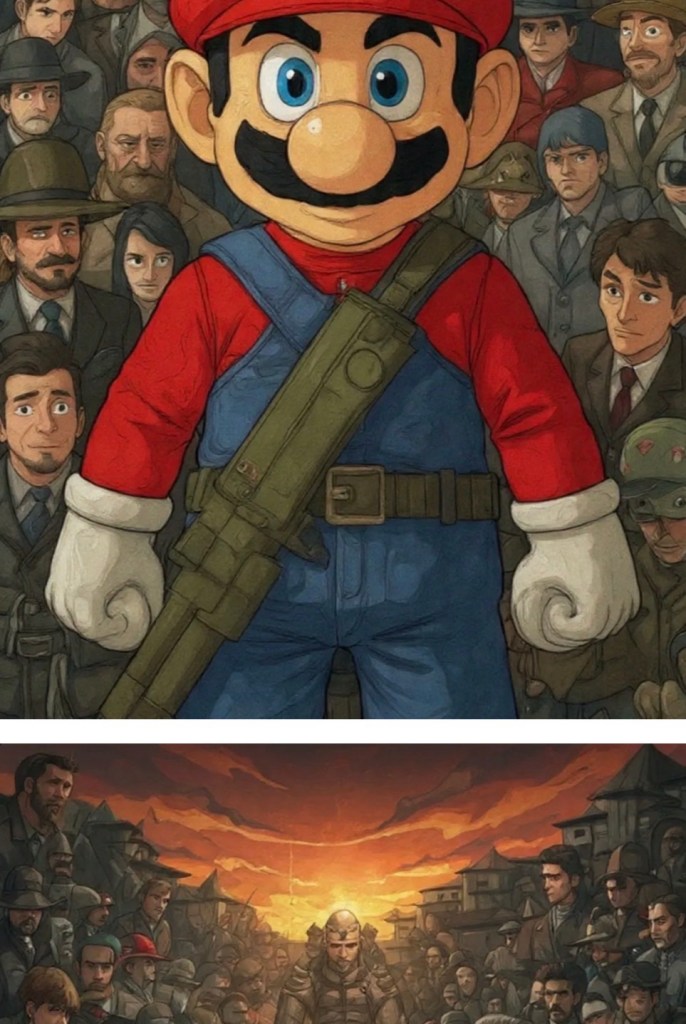
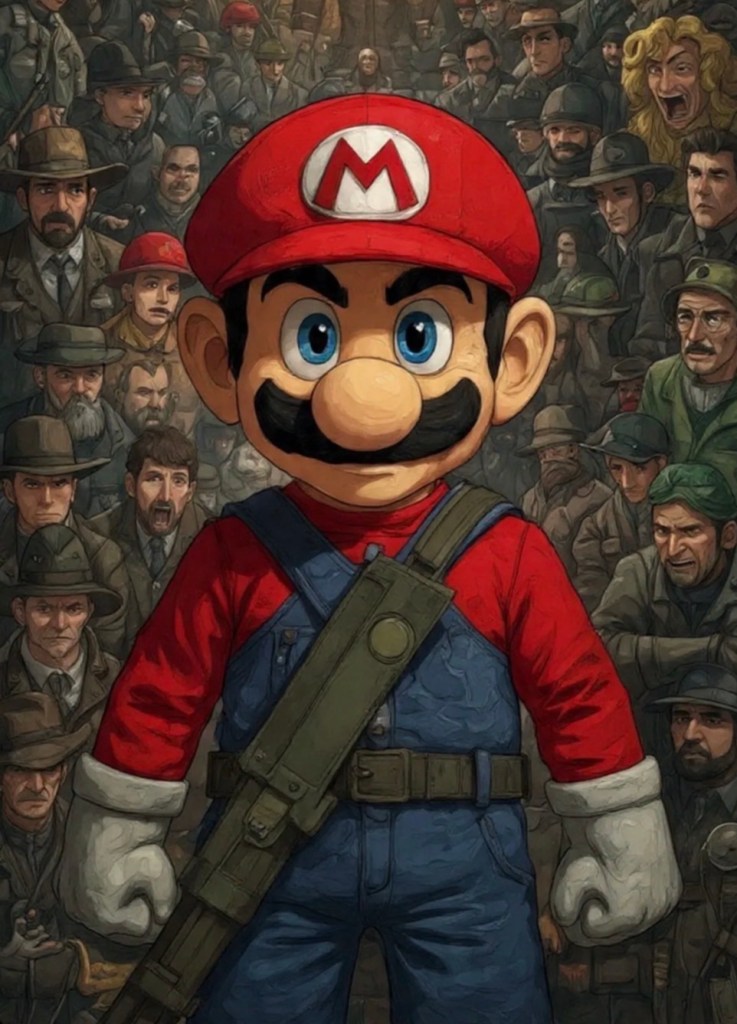
At the center stands a recognizably iconic, child-coded game mascot—roundfeatures, primary colors, oversized eyes—rendered with painterly texture and hyper-
detailed shading. The figure’s scale and placement are crucial: frontal, monumental,
and calm. Behind them, the frame erupts into a dense mass of armed figures—
soldiers, mercenaries, masked combatants—compressed into a single,
claustrophobic backdrop. The composition creates a visual funnel: chaos recedes
into depth while the central figure remains unnervingly serene.
Nazifi’s technique amplifies contradiction. The soft, almost clay-like rendering of the
protagonist clashes with the hard metallic realism of weapons and armor. The color
palette reinforces this tension: warm reds and blues in the foreground versus
desaturated grays and greens behind. The result is not harmony, but friction—an
aesthetic standoff between play and violence.
Political analysis
Politically, the image reads as an indictment of the militarization of popular culture. By
placing a symbol of childhood entertainment at the center of an armed multitude,
Nazifi suggests how war narratives seep into spaces once associated with joy,
simplicity, and escape. The character does not appear frightened or aggressive;
instead, they are normalized within the machinery of conflict. That normalization is
the point.
The surrounding crowd is tellingly anonymous. Individual faces blur into types,
uniforms, and factions, implying that modern warfare is less about ideology and more
about endless reproduction—of soldiers, enemies, and myths. The central figure, by
contrast, is instantly legible, globally recognizable. Power here flows from visibility
and branding rather than moral authority.
There is also a sharp commentary on spectatorship. The image resembles a poster, a
splash screen, a collectible print—formats tied to consumption. Violence becomes
something to admire, to collect, to aestheticize. The weapon slung across theprotagonist’s body is not presented as shocking; it is treated as an accessory. In
doing so, Nazifi mirrors how entertainment industries often sanitize conflict, turning it
into narrative flavor rather than human catastrophe.
Synthesis
Ultimately, the work asks an uncomfortable question: What happens when icons
meant to protect childhood imagination are drafted into adult systems of power?
Nazifi does not answer directly. Instead, he lets the image sit in its own unease—
cute, intimidating, familiar, and wrong all at once.
The animation’s strength lies in that discomfort. It doesn’t accuse the viewer from the
outside; it implicates them through recognition. You know this character. You grew up
with them. And now they stand calmly at the center of war, daring you to notice how
easily play can be repurposed into propaganda.
RELEASE
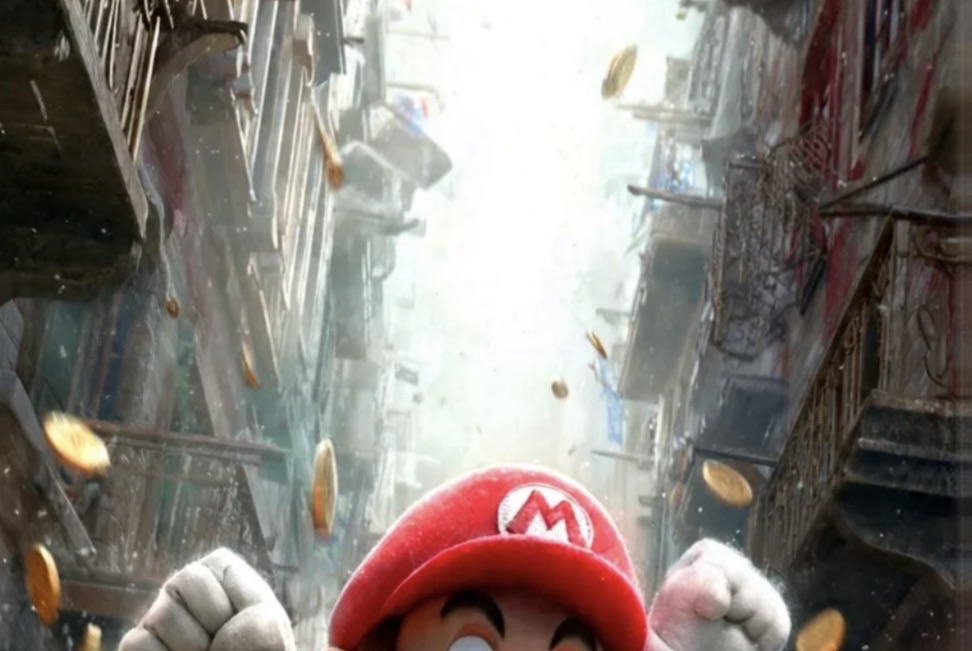
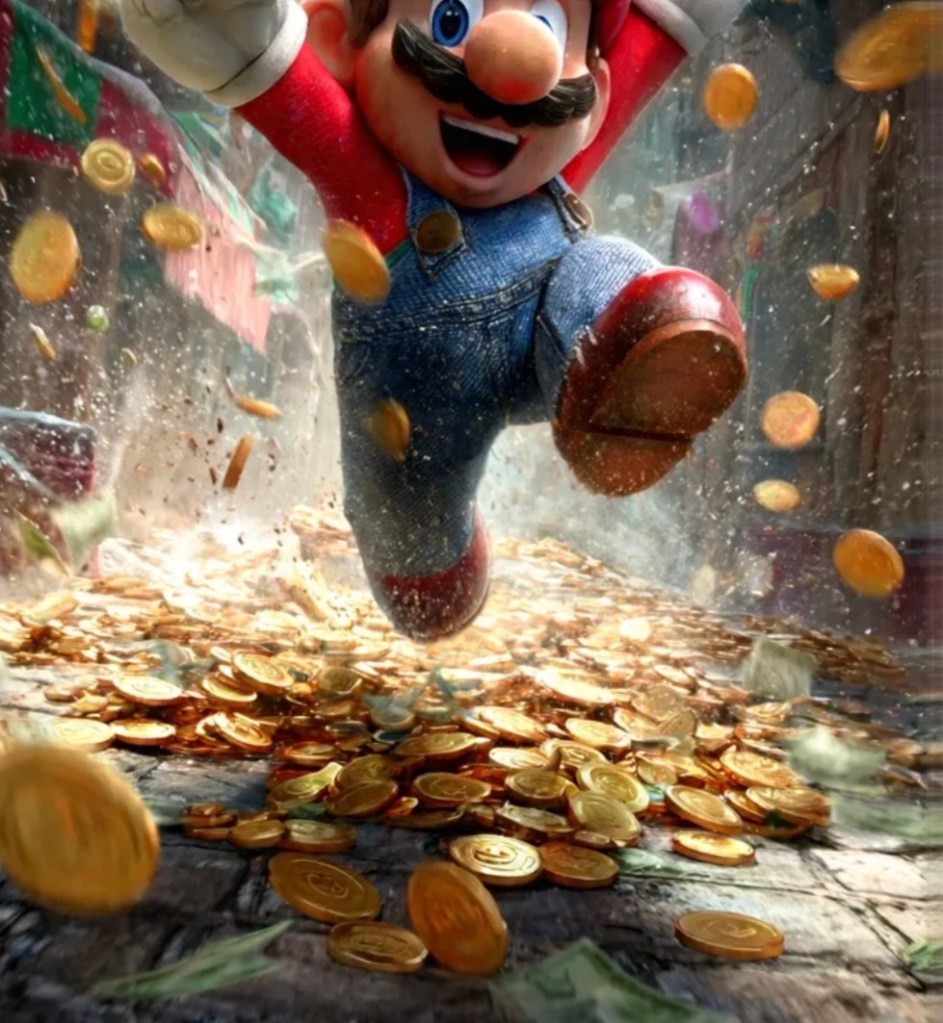
This animated work attributed to Farid Nazifi stages a familiar pop-cultural figure—
Mario—within a dense, cinematic urban corridor, transforming a playful icon into a
vehicle for political allegory and contemporary critique.
Artistic Analysis
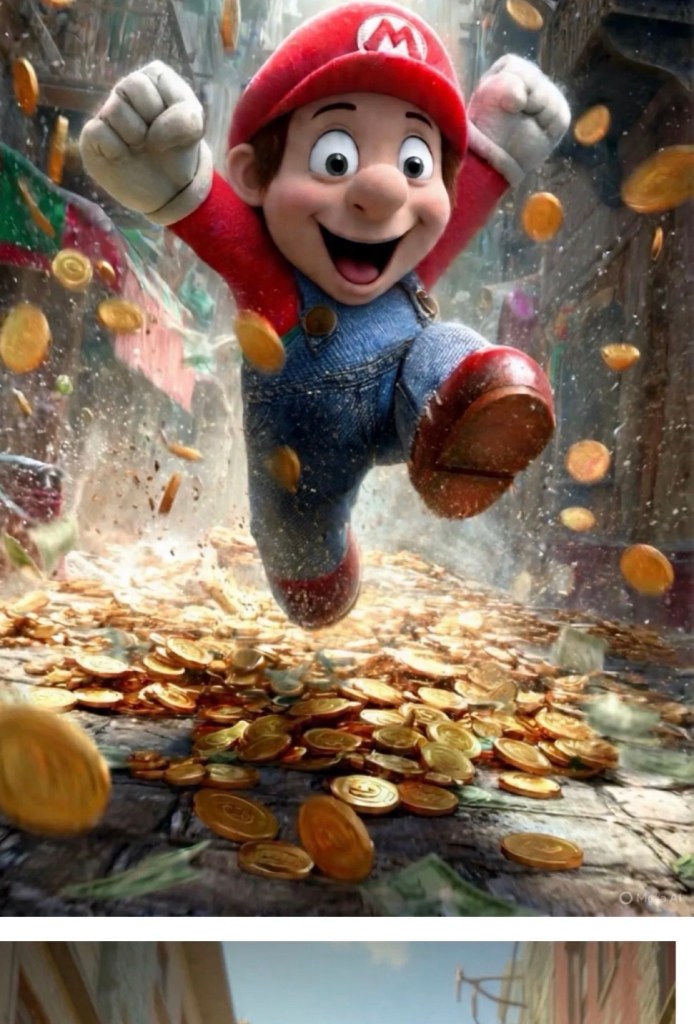
Visually, the piece relies on hyperreal animation: shallow depth of field, motion blur,and particulate effects (dust, coins, debris) generate a visceral sense of speed and
impact. Mario is frozen mid-stride, breaking through gravity and space, while coins
explode outward like shrapnel. The composition centers him as a kinetic force,
almost messianic in posture—arms raised, mouth open in exhilaration—contrasting
sharply with the cramped, decaying vertical cityscape around him.
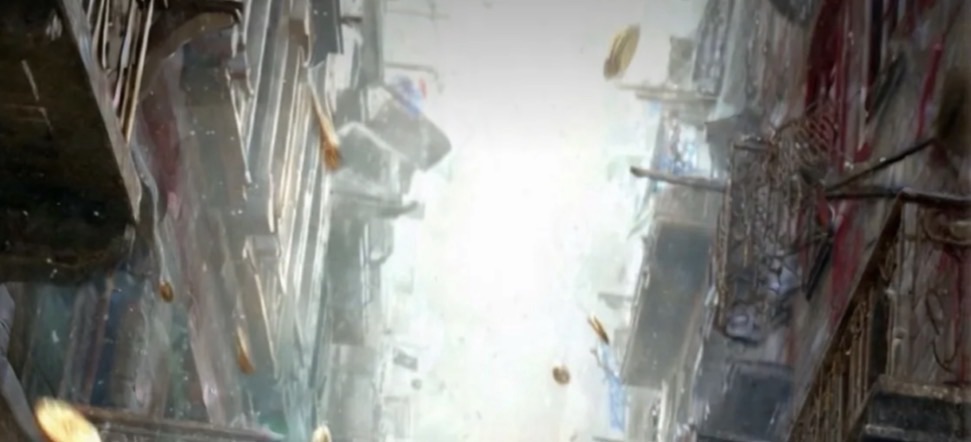
Nazifi’s use of urban density is critical. The alleyway, cluttered with scaffolding,
balconies, and layered textures, feels overbuilt and exhausted. This environment
frames Mario not as a cheerful adventurer but as an intrusive, almost disruptive body.
The coins, rendered with excessive materiality and weight, dominate the ground
plane, turning what was once a playful reward system into a literal flood of value.
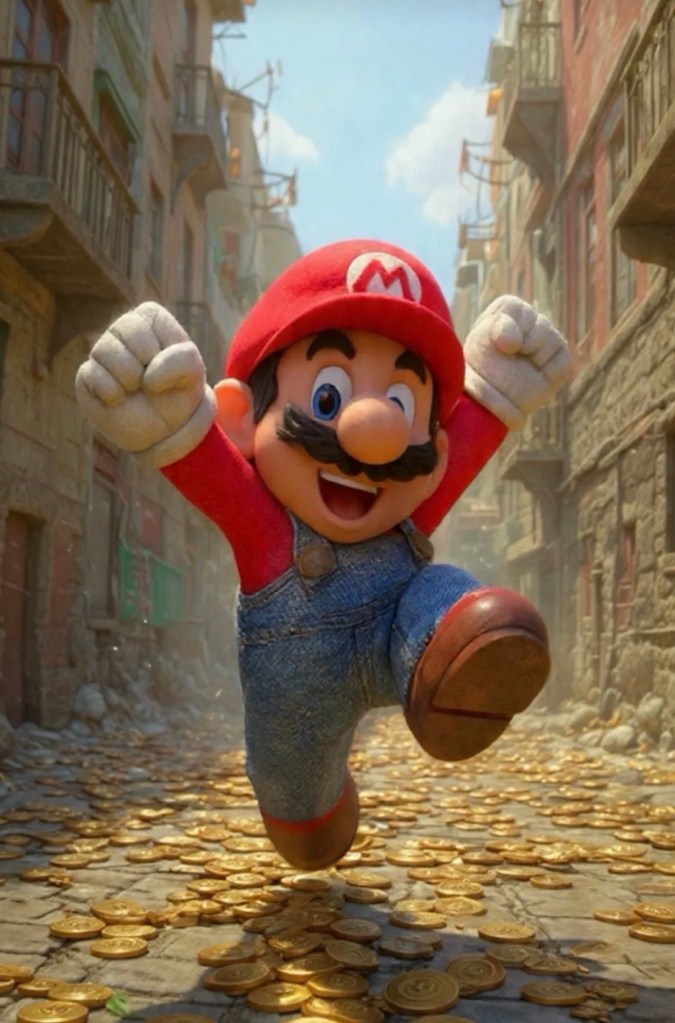
Stylistically, the work blends game aesthetics with cinematic realism, collapsing the
boundary between fantasy and lived space. This friction is where much of the piece’s
tension resides.
Political Analysis
Politically, the image can be read as a commentary on gamification under late
capitalism. Mario—historically a neutral, joyful laborer collecting coins without
consequence—now appears embedded in a world where accumulation has spilled
into excess. The coins no longer signify progress or success; they overwhelm the
environment, becoming debris rather than reward.
The alley suggests a Global South or post-industrial urban setting, where economic
systems imported from elsewhere collide with local realities. Mario’s jubilant
expression, unchanged despite the chaos, evokes the blindness of global economic
narratives to the conditions they pass through. He is successful by the game’s rules,
but those rules are detached from the environment he disrupts.
There is also an implicit critique of cultural imperialism. Mario, a globally recognizablecorporate character, moves effortlessly through a space that does not belong to him,
untouched by its fragility. The city bends to his momentum; its walls frame him, its
ground absorbs his impact. This asymmetry mirrors how dominant cultural products
traverse borders, extracting value (coins) while leaving structural strain behind.
Finally, the work reflects on agency and inevitability. Mario is always running forward
—he cannot stop. In that sense, he becomes a symbol not of individual heroism, but
of systems that move relentlessly, propelled by internal logic rather than ethical
reflection.
Synthesis
Nazifi’s animated work succeeds by weaponizing nostalgia. By placing an innocent,
beloved character into an overburdened, materially saturated world, the artist
exposes how systems once perceived as playful or neutral can become engines of
disruption when scaled globally. The image is energetic and celebratory on the
surface, yet deeply uneasy beneath—suggesting that joy, when divorced from
context, can become complicit.
In this way, the piece is less about Mario himself and more about the world that now
surrounds him—and what it costs to keep running forward.

Congratulations on my e-book release. 📓here you can download the e-book
 Farid Nazifi