Political Art Analysis of OTANDOWS 77 by Farid Nazifi
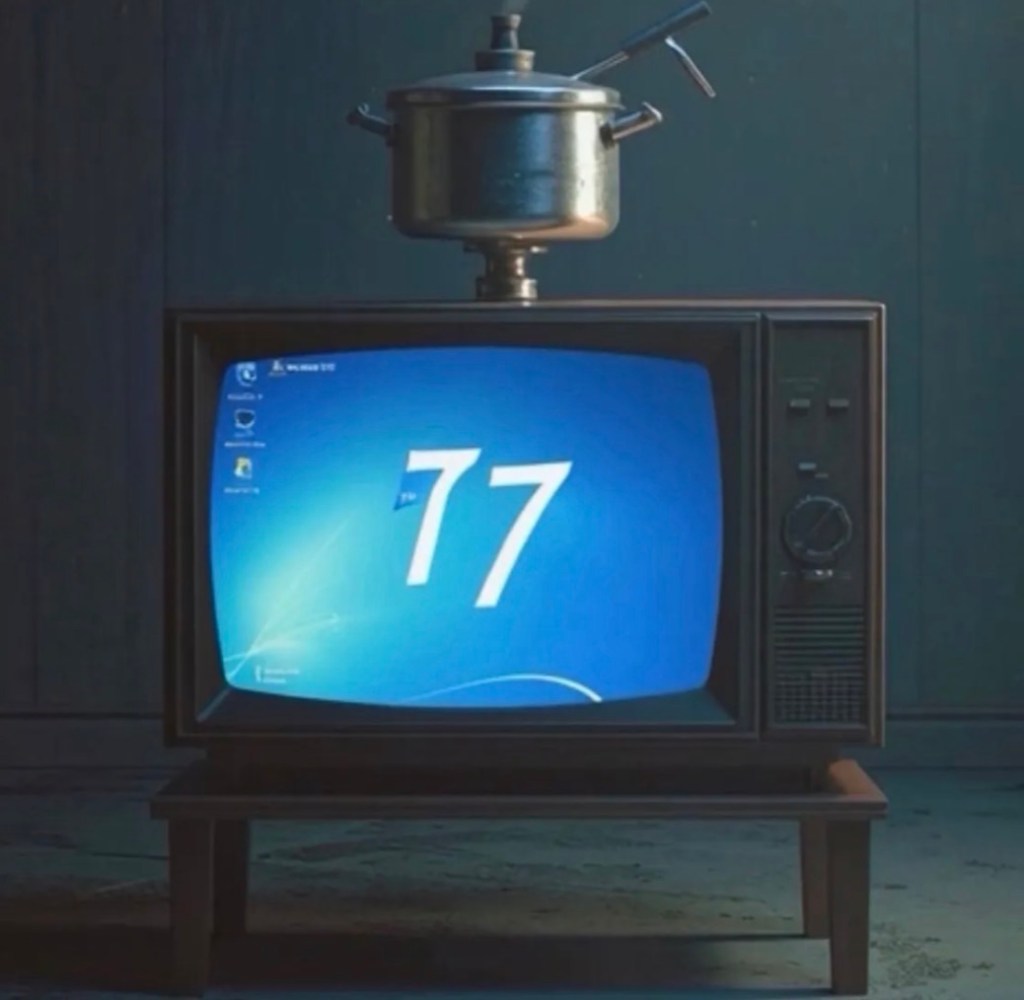
OTANDOWS 77 is a compact but loaded political allegory that stages tension, power,
and delay through everyday objects: a pressure cooker, a vintage television, smoke,
and shifting textual signals—“OTAN” and “77.” The work operates at the intersection
of domestic life and geopolitical violence, a space that resonates deeply with Farid
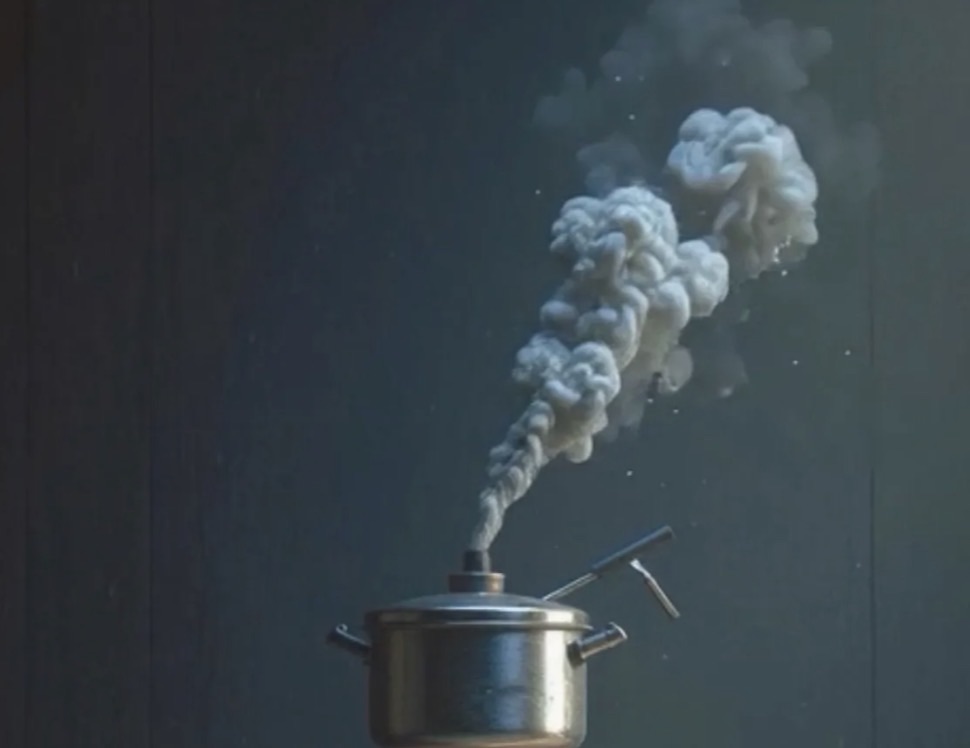
Nazifi’s position as an Iranian refugee living in Germany.At the core of the composition is the pressure cooker, a domestic object associated
with nourishment and routine. Here, however, it becomes a symbol of contained
violence—a vessel designed to hold pressure just short of explosion. This metaphor
is difficult to separate from contemporary Iran, where social, political, and economic
pressure has accumulated over decades under authoritarian control, sanctions, and
recurring cycles of protest and repression. The cooker’s steam is not chaotic; it is
regulated, suggesting a system that allows limited release but never genuine relief.
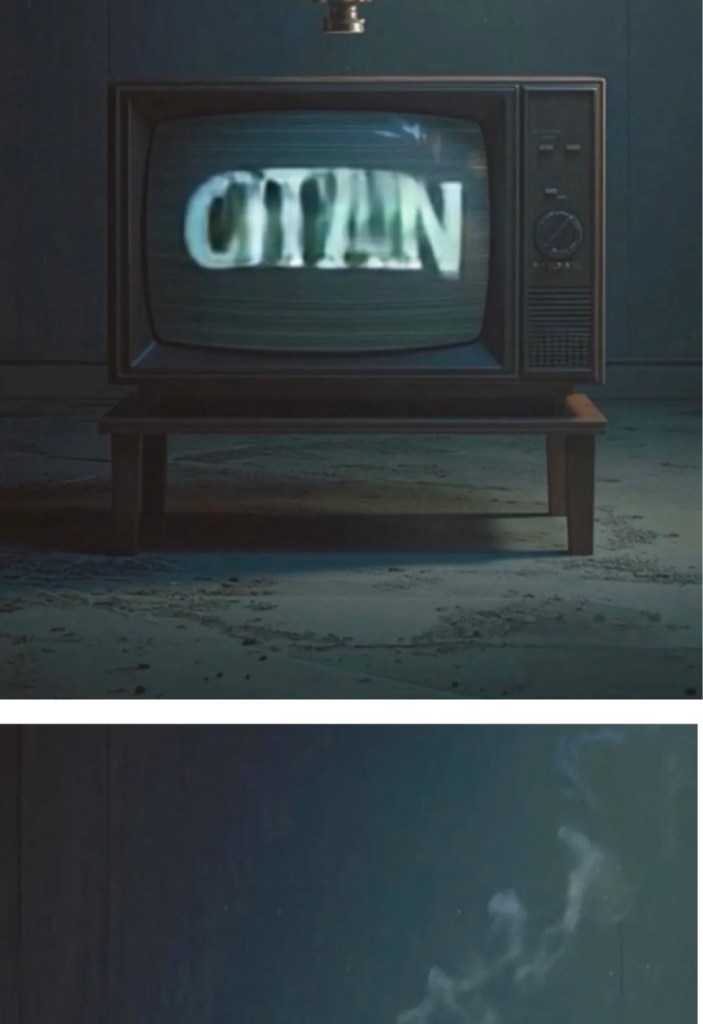
Beneath it sits the television, a mediator of reality and propaganda. In one frame, the
screen displays “OTAN”—the French acronym for NATO. This linguistic choice is
crucial. “OTAN” signals Europe, Western military alliances, and the language of
international intervention, while also emphasizing distance: Iran is often discussed
about, not with. The TV becomes a mouthpiece for global power narratives, where
Iranian lives are reduced to headlines, strategic calculations, or moral abstractions.
The act of a hand adjusting the cooker introduces a subtle but powerful intervention.
This hand can be read as Western influence—sanctions, diplomacy, covert
operations—carefully modulating pressure without dismantling the system itself. It is
not liberation, but management. The gesture implies control without accountability,
echoing how international actors often “handle” Iran: preventing explosion while
allowing suffering to continue.
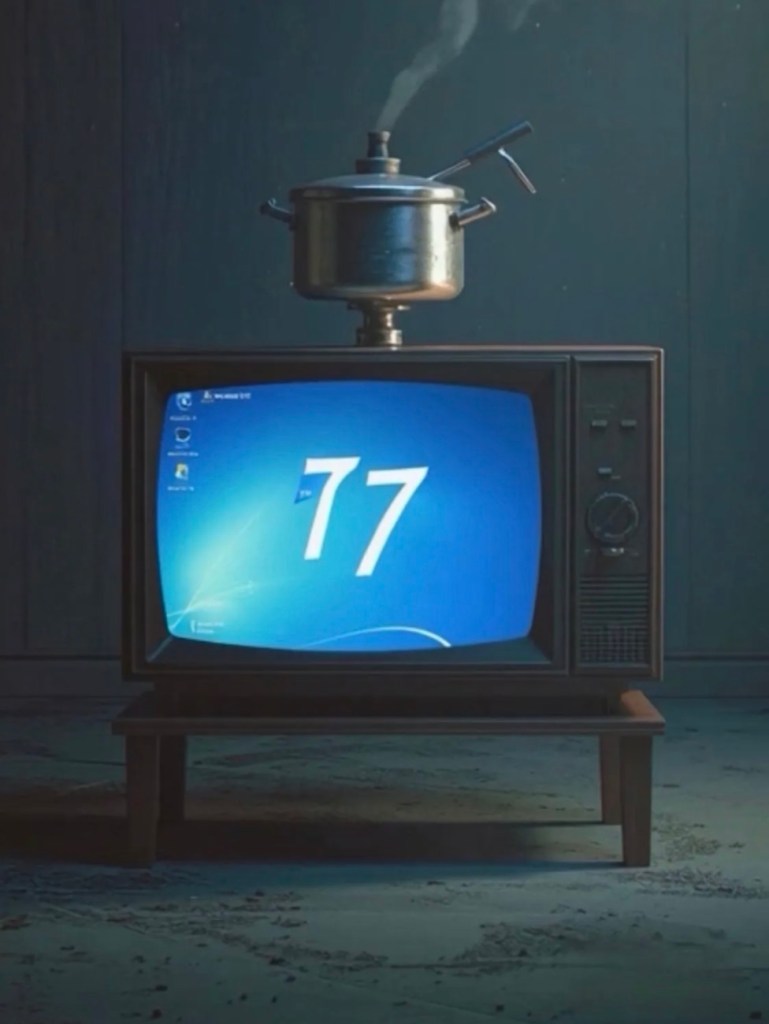
The final image replaces “OTAN” with “77”, a number that invites multiple readings. It
can reference 1977–79, the years leading up to the Iranian Revolution, when pressure
similarly built beneath the surface of everyday life. It may also allude to repetition and
stasis: history looping rather than resolving. The shift from a political acronym to an
abstract number suggests the collapse of meaning—news reduced to symbols,
dates, and statistics, stripped of lived experience.
The muted color palette, retro television, and absence of faces reinforce a sense of
temporal suspension. This is not a moment of explosion but of permanentanticipation. The work speaks to a global condition in which crises—especially in the
Middle East—are endlessly broadcast yet endlessly deferred, normalized as
background noise.
Seen through Nazifi’s biography, OTANDOWS 77 becomes even sharper. As an
Iranian refugee in Germany, he occupies the space between lived trauma and
mediated representation. The artwork does not scream; it simmers. It refuses
spectacle in favor of sustained pressure, mirroring the psychological condition of
exile: waiting, watching, knowing something will happen but not when—or for whom.
Ultimately, OTANDOWS 77 critiques both authoritarian containment within Iran and
strategic containment by global powers. It asks an uncomfortable question: when
pressure is managed rather than resolved, who benefits from the delay—and who is
left inside the cooker?
Congratulations on my e-book release. 📓here you can download the e-book
 Farid Nazifi