Political & Artistic Analysis of Shelter
Farid Nazifi Benvis
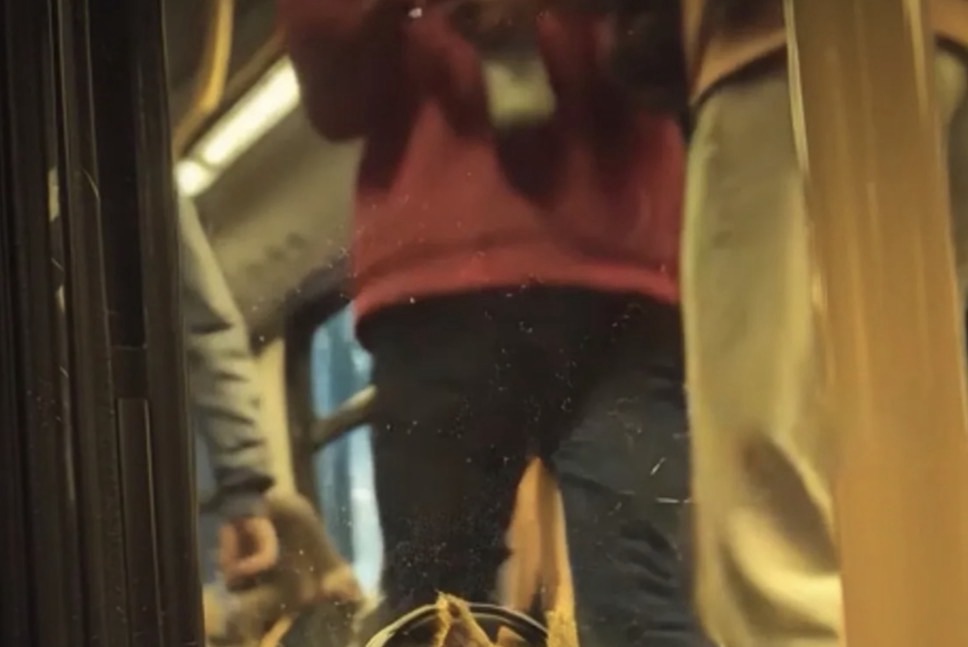
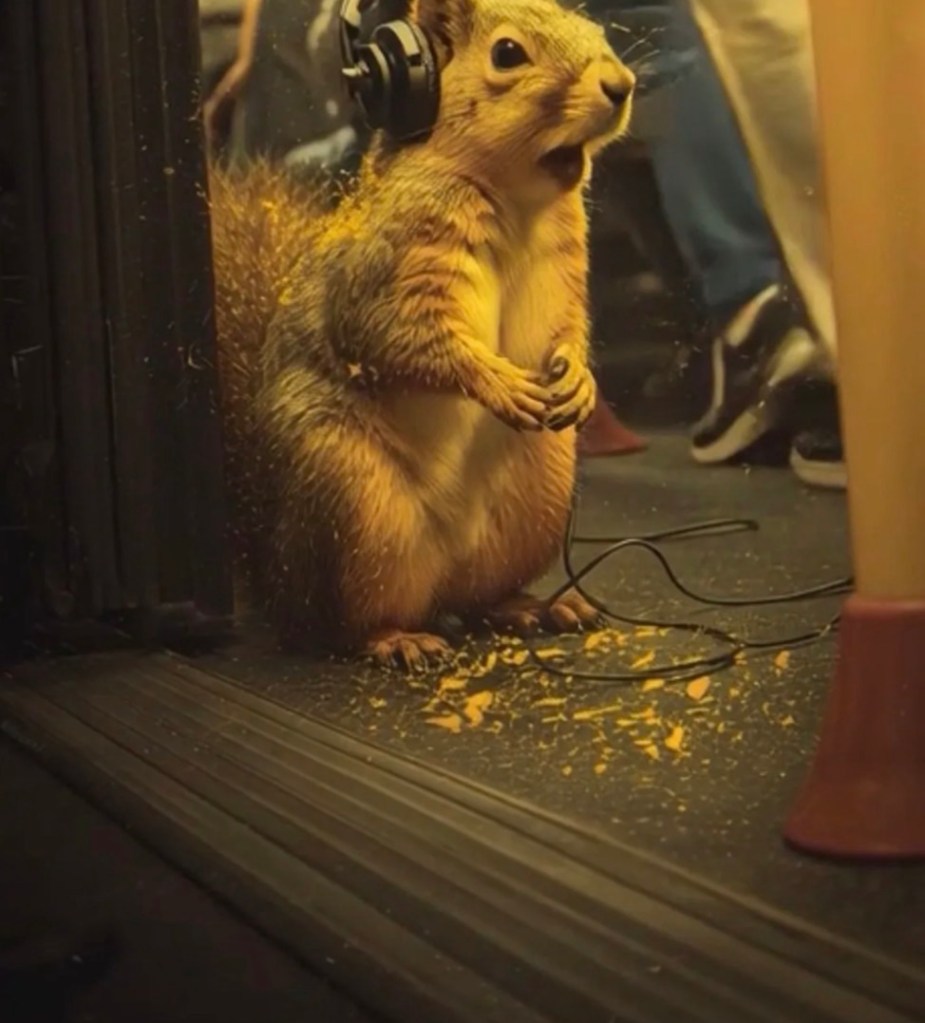
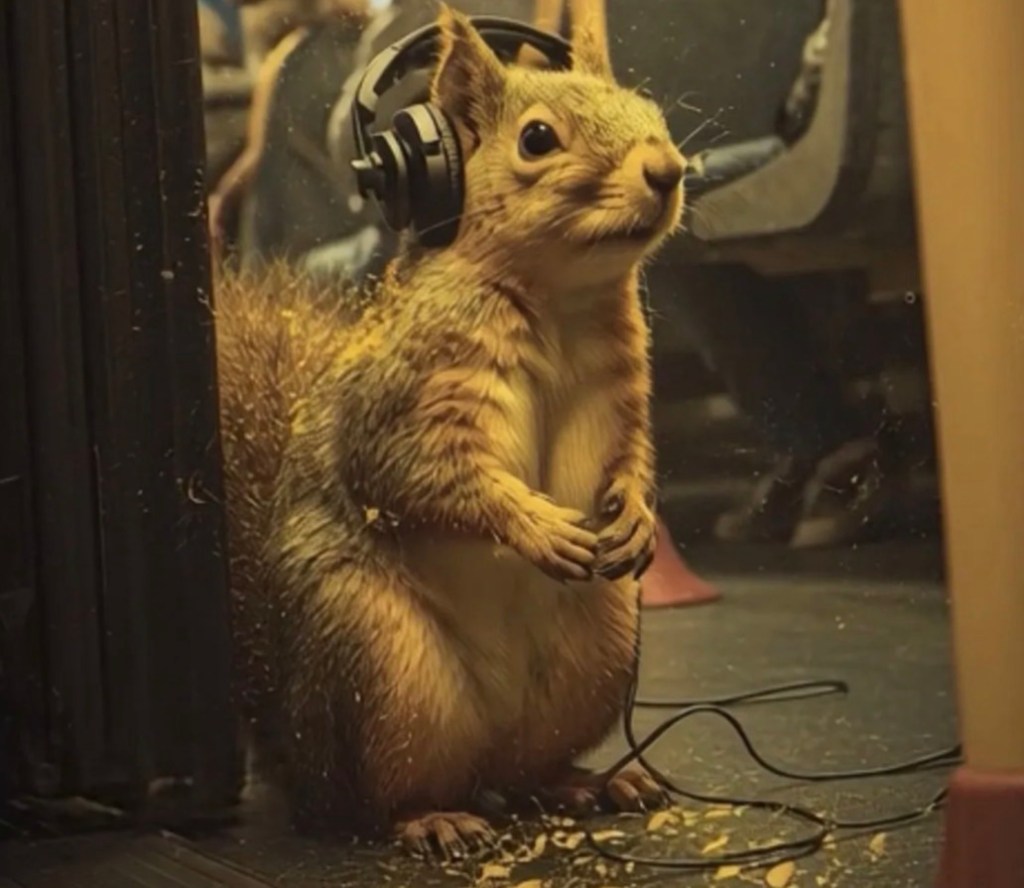
At first glance, Shelter presents an almost whimsical image: a squirrel wearing
oversized headphones inside a crowded public transport carriage. But that whimsy is
doing serious political work.1. The Squirrel as Political Subject
The squirrel functions as a proxy citizen — small, vulnerable, alert, and displaced. It
is not native to this environment, much like many individuals navigating contemporary
political systems in Texas and Saxony.
In Texas, current debates around migration, homelessness, public safety, and state
control place vulnerable populations into highly visible yet powerless positions. In
Saxony, similar tensions exist around migration, economic insecurity, and the rise of
exclusionary politics.
The squirrel is present but not protected — a being allowed to exist in public space
but not truly accommodated by it.
2. Headphones: Self-Isolation as Survival
The headphones are crucial. They symbolize:
Psychological withdrawal Algorithmic comfort Selective listening in polarized
societies
In both Texas and Saxony, political discourse has become loud, hostile, and
exhausting. The headphones suggest that survival now requires tuning out — not out
of apathy, but necessity. This mirrors how citizens retreat into ideological or digital
“shelters” when public space feels unsafe.
3. Public Transport as the State
The subway/bus interior operates as a metaphor for the state apparatus:
Crowded Moving forward without individual control Governed by unseen rules
The animal is inside the system, not outside it — suggesting that marginal groups arenot external “problems” but internal contradictions within modern governance.
4. Crumbs on the Floor: Precarious Economics
The scattered food debris at the squirrel’s feet points to scarcity and informal
survival:
Gig economies Shrinking social safety nets Survival through leftovers
This resonates strongly with:
Texas’ rollback of welfare protections Saxony’s post-industrial economic anxiety
Shelter here is not comfort — it’s temporary relief.
5. Shelter as a Paradox
The title Shelter is deeply ironic. The public vehicle offers:
Physical enclosure Emotional exposure
There is protection from the outside, but no dignity inside. This reflects contemporary
governance: people are “included” structurally but excluded socially.
6. Academic Influence
Nazifi’s background in Fine Arts and Informatics becomes evident:
Fine Arts: symbolic compression, metaphor, visual irony Informatics: systems
thinking, nodes within networks, behavioral adaptation
The squirrel behaves like a data packet inside a noisy system — buffered,
compressed, waiting.Final Reading
Shelter argues that in Texas and Saxony alike, modern citizens increasingly resemble
urban wildlife:
Adaptive but anxious Visible but unheard Sheltered but unsafe
It is not a protest image — it is a diagnosis.
POSITIVE POINTS :
Rewrite this as a curatorial wall text Turn it into an academic abstract Or sharpen it
into a political critique essay
Congratulations on my e-book release. 📓here you can download the e-book
 Farid Nazifi