Analysis of the Artwork by Farid Nazifi
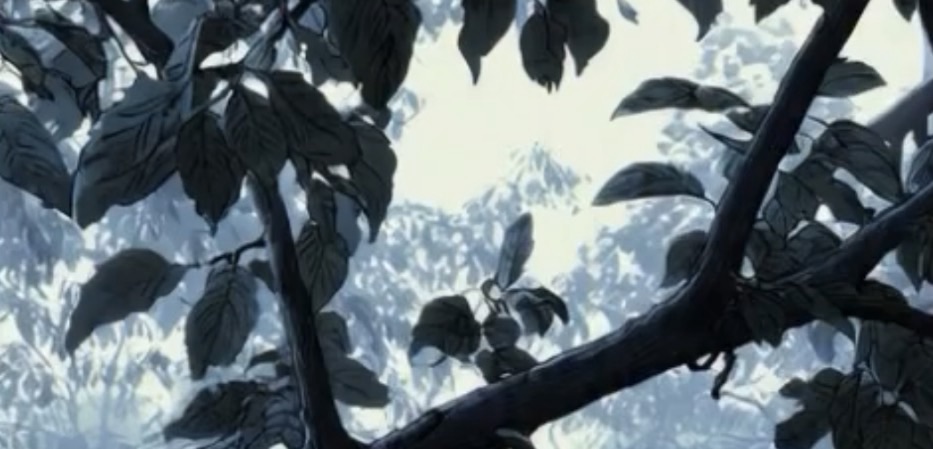
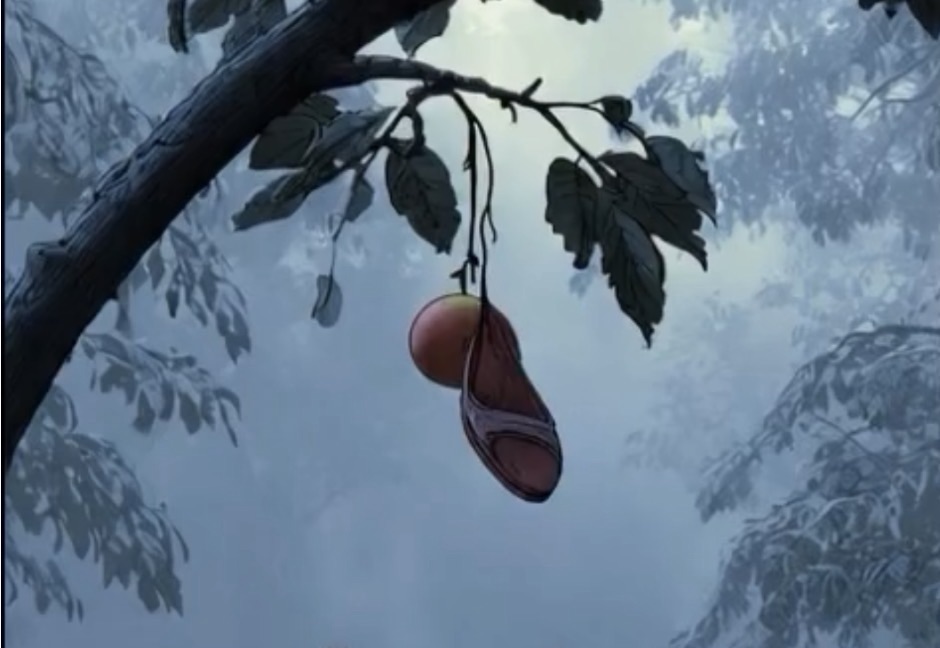
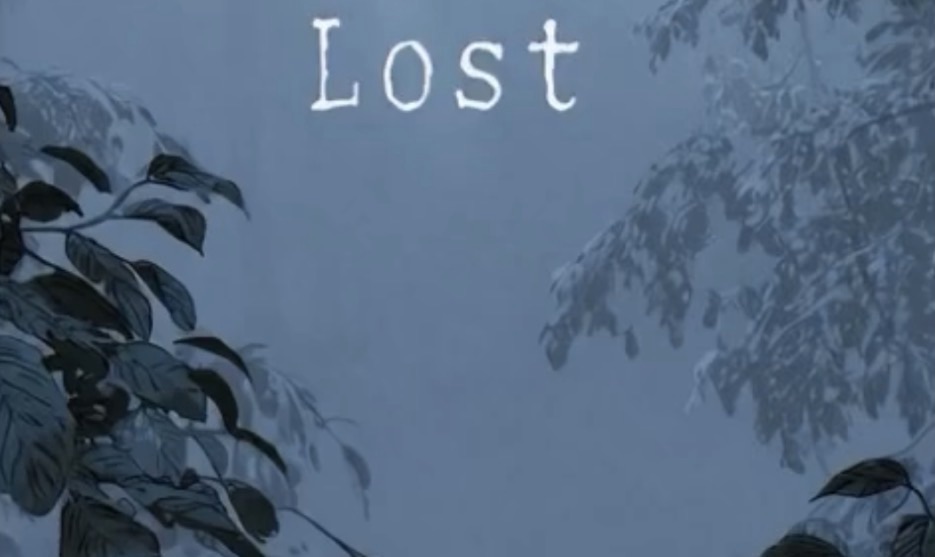
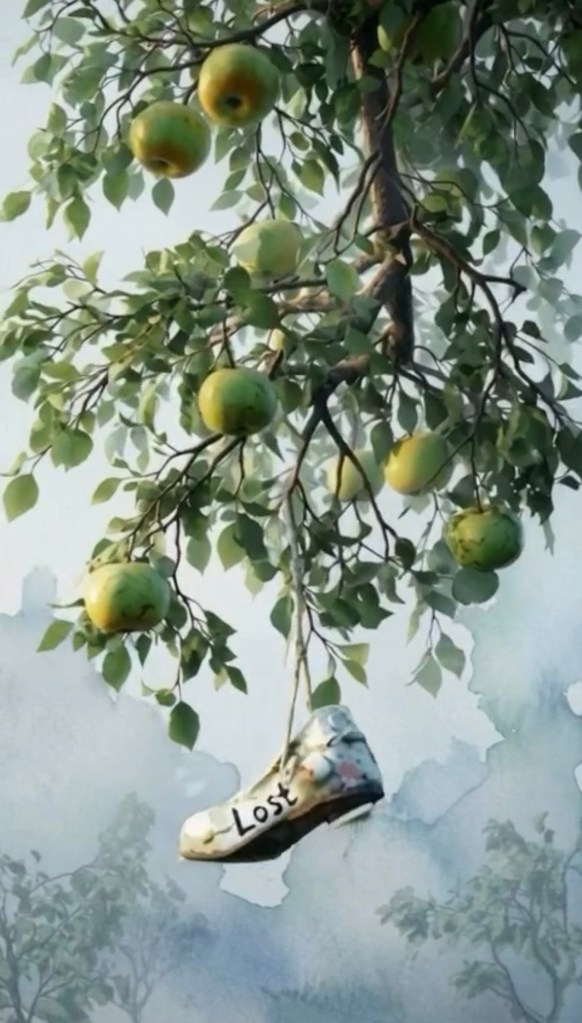
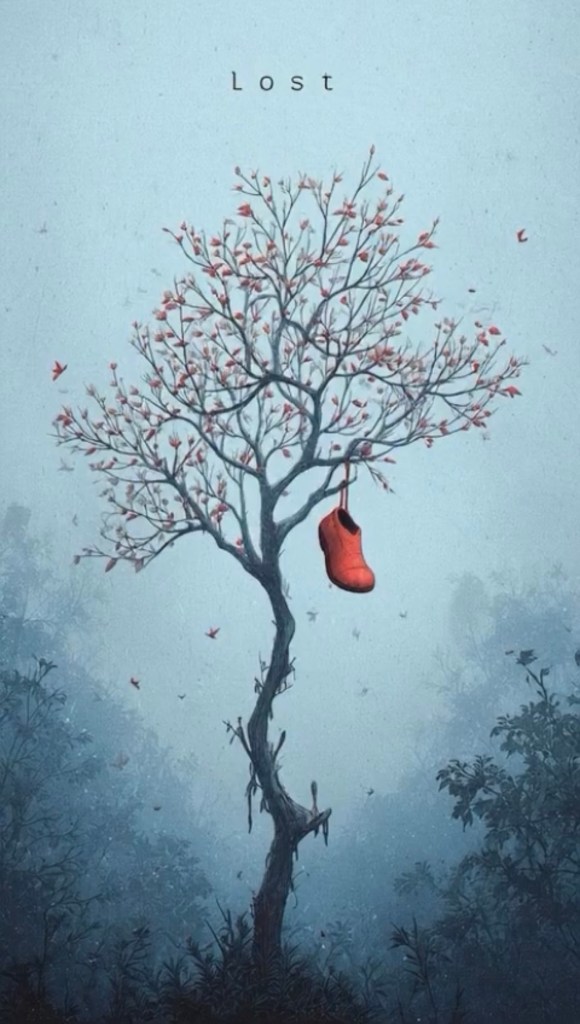
Farid Nazifi’s motion graphic presents a quiet yet haunting visual metaphor: a single slipper hanging from the branch of an apple tree, gently moving in the wind, with the word “Lost” written across it. Across different episodes, the imagery shifts slightly—sometimes the tree is blooming with delicate pink blossoms, sometimes it bears ripened apples, sometimes it stands in a mist-filled forest. Yet the central object remains constant: the suspended shoe.
The slipper functions as a powerful symbol of human presence through absence. A shoe is an intimate object—it carries the imprint of a body, a journey, a direction. Detached from its wearer and hung unnaturally from a tree, it becomes evidence of interruption. The word “Lost” transforms it from a mere misplaced object into a narrative fragment. We are not simply witnessing a forgotten belonging; we are confronting the idea of disappearance—of a person, a childhood, a memory, or even a sense of self.
The apple tree deepens the symbolic field. Traditionally associated with knowledge, temptation, growth, and life cycles, the tree in Nazifi’s work becomes a silent witness. In some frames it blossoms—suggesting beginnings, innocence, renewal. In others it bears fruit—implying maturity, consequence, time passed. The natural rhythm of the tree contrasts sharply with the unnatural presence of the hanging slipper. Nature continues its cycles, while the human story remains suspended and unresolved.
The misty atmosphere and subdued blue-gray palette create a feeling of distance and melancholy. The red or muted tones of the shoe subtly draw the eye, functioning as the emotional focal point. Movement—gentle swaying in the wind—adds a temporal dimension. The slipper is not static; it oscillates, as if caught between falling and remaining, between being remembered and being forgotten. This motion reinforces the theme of instability and emotional suspension.
There is also a poetic tension between gravity and attachment. A shoe belongs to the ground; here, it is elevated and estranged. It hangs like fruit, yet it is not organic. This visual paradox suggests themes of displacement and identity—when something (or someone) is removed from its rightful context, it becomes symbolic rather than functional.
In broader interpretive terms, the artwork may evoke:
Lost childhood or innocence Migration and displacement Memory suspended in time The fragility of human presence within enduring nature The search for belonging
Nazifi’s minimal narrative invites viewers to project their own story onto the scene. The absence of figures intensifies the emotional resonance. We are left with a trace, a sign, a word—Lost—and the quiet persistence of a tree that continues to grow.
“The Orchard of Absence” captures this tension: a place of life and growth that simultaneously holds a lingering echo of something missing. The work succeeds in transforming a simple object into a contemplative meditation on loss, memory, and the quiet poetry of what remains unseen.
“Suspended Journeys: The Tree of Becoming and Belonging”
🎨 Artistic Analysis
Farid Nazifi uses sparse yet evocative imagery—a single slipper suspended from an apple tree—to evoke feelings of absence, transition, and unresolved identity. The floating slipper is a visual metaphor for displacement. A shoe belongs on a foot, and feet belong on the ground. When severed from their human subject and hung from a branch, they become a symbol of liminality: caught between motion and stillness, belonging and exile.
The apple tree-ground—symbolic of growth, temptation, and knowledge in many cultural and artistic traditions—acts as a counterpoint to the shoe’s dislocation. The presence of apples and blossoms suggests life cycles and natural continuity, while the misplaced shoe interrupts that rhythm. Through subtle visual shifts across episodes—seasonal changes, misty woods, changing colors—Nazifi explores how identity persists even when fractured.
Movement and stillness operate together. The gently swaying slipper becomes a form of “visual breath,” indicating time passing and the unresolved tension between past and future.
🙏 Religious and Spiritual Interpretation
In Iranian cultural and spiritual sensibilities, both trees and shoes carry layered meanings:
Trees evoke sacred life—from Zoroastrian sacred groves to Sufi symbols of the divine Beloved rooted in the world yet extending toward the heavens. Apples suggest knowledge and the paradox of loss and awakening. Shoes in Islamic tradition are symbols of humility (one removes shoes before prayer); they also appear in supplications for protection and justice.
The hanging shoe can be read as a spiritual symbol of suspended belonging—a pilgrim who has left home, yet is not yet arrived. It is the mark of a seeker caught between worlds: memory and prophecy, loss and hope.
The Persian word for loss, “گمشده” (gomshodeh), carries spiritual weight: not just lost physically, but lost morally, ethically, spiritually. Nazifi’s work evokes this layered meaning: the outward journey of migration becomes a deeper inner journey—a search for self, faith and home.
=⚖️ Political and Legal Statement (Contextualized)=⚖️ Political and Legal Statement (Contextualized)=
Farid Nazifi’s personal journey mirrors the realities of thousands of Iranians who have fled war, repression, or lack of opportunity and sought refuge in Europe. His biography—an Iranian student in Ukraine during wartime, an asylum applicant through UNHCR, a German language learner whose progress was interrupted—echoes many stories now unfolding across borders.
Political Context
Iran’s current political climate has driven waves of migration: economic instability, suppression of dissent, and the aftermath of state violence have made life precarious for many, particularly for youth and intellectuals. Many Iranian refugees, like Nazifi, find themselves in legal limbo, caught between incomplete documentation, complex asylum bureaucracies, and cultural dislocation. Abroad, Iranians continue to be politically engaged—protesting, advocating for human rights, and maintaining connection to events in Iran.
Nazifi’s artwork becomes, therefore, politically resonant: not just about loss, but about the uncertain status of those uprooted by circumstance; about belonging without citizenship, identity without home, movement without return.
⚖️ Legal and Social Statement Related to Current News & Iranian Diaspora
Nazifi’s situation—continuing language studies but not passing B2 exam, living in Germany while past asylum processes remain unresolved—is not unique. Many refugees and asylum seekers face:
Legal Precarity
Protracted asylum processing times, especially for those from countries experiencing conflict. Language proficiency requirements that affect access to integration measures, housing, healthcare, and employment authorization. Difficulty in transitioning from student status to recognized refugee or residency status. Lack of state support in achieving certification, even after extended effort.
Social and Cultural Realities
Iranian expatriate communities persistently organize cultural events, protests against repression in Iran, and mutual support networks. Many Iranian artists abroad use their practice to narrate stories of injustice, survival, identity fragmentation, and the pursuit of dignity.
Integrated Interpretation of the Work
“Suspended Journeys: The Tree of Becoming and Belonging” becomes an artwork that functions on multiple levels:
✔️ Artistically—it captures universal emotions of loss and memory.
✔️ Spiritually—it expresses the liminal struggle between rootedness and exile, familiar in Iranian mysticism.
✔️ Politically—it reflects the unresolved identity of refugees who are present but not fully recognized.
✔️ Legally—it symbolizes bureaucratic suspension—the waiting, the uncertainty, the displacement embedded in current asylum and migration policies.
Nazifi’s work is not simply an aesthetic experience; it is a living testimony—to being from somewhere and belonging nowhere, to a world where the body travels but the legal status remains in the air like a shoe hanging from a branch.
Congratulations on my e-book release. 📓here you can download the e-book
 Farid Nazifi